The past, present, and future of ad monetization in the game app market: Welcoming two globally expanding game app companies as guests to discuss hybrid monetization strategies combining “in-app purchases × advertisements.”
Introducing methods to maximize game revenue through a combined approach of purchases and ads while boosting user engagement.
Skyfall Inc. (Headquarters: Minato-ku, Tokyo; CEO: Tomokazu Hasegawa; hereinafter “Skyfall”), operator of the ad monetization platform “SKYFLAG,” spoke at “GAME FUTURE SUMMIT 2024” (hosted by Game8 Inc. and MOTTO Inc.)—a large-scale offline conference for the gaming industry held on Wednesday, June 5, 2024. The company participated in a session under the theme “Hybrid Monetization Strategies Combining Purchases and Ads to Maximize Game Revenue.”
On the day of the event, alongside AppLovin, which provides ad monetization tools, guest speakers from game app operators GOODROID, Inc. and Fundoshi Parade Co., Ltd. were welcomed to discuss the importance and potential of ad monetization in the gaming industry, as well as the future of app monetization.
This release delivers the event report and archive links for the session.
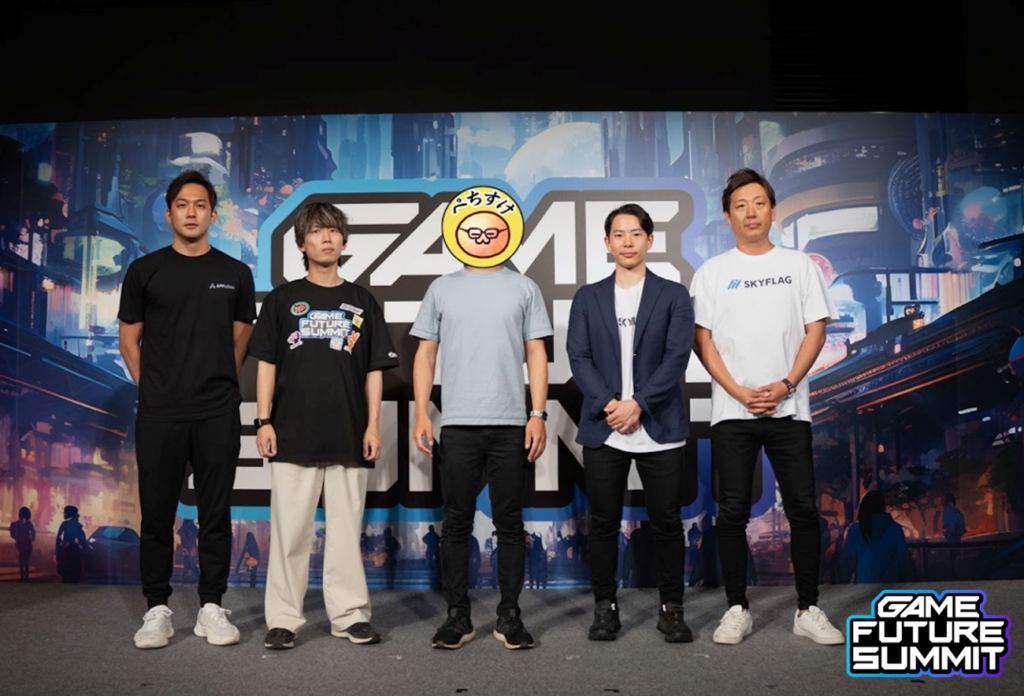
・Archived Video: https://www.youtube.com/watch?v=fU6Z5_zasfE&t=706s
Agenda 1: The Reality of “Monetization in the Domestic Game Market” Compared to Overseas Markets
GOODROID’s “Tokyo Revengers Pazuribe! Road to National Domination” (hereinafter “Pazuribe!”) and Fundoshi Parade’s “Just Kill Me 3” utilize a combination of in-app purchases and advertisements. The companies explained that their in-app revenue ratio is roughly 7 (in-app purchases) to 3 (ad revenue), demonstrating how they maximize game revenue by utilizing ads while keeping purchases as the core pillar.
Regarding the timing when ad monetization began to be considered, Mr. Onodera from GOODROID shared that even before developing “Pazuribe!”, his company had already built a successful track record with ad monetization in overseas markets through other services, experiencing its high profitability firsthand. Consequently, from the development stage of “Pazuribe!”, the team prepared for the launch by simultaneously evaluating ad monetization alongside traditional in-app purchases.
Furthermore, Mr. Shiraishi from Fundoshi Parade introduced that due to a proactive internal policy toward ad monetization, “Just Kill Me 3” was developed from an early stage under the premise of running purchases and ads together. He shared insights on how the company actively navigated ad monetization, carefully evaluating and choosing which ad formats would yield the best results.
Agenda 2: Success Stories of Hybrid Monetization Utilizing Rewarded Video Ads and In-App Purchases
[Concerns Regarding the Utilization of Ad Monetization]
While many game app companies harbor concerns about integrating ads within their apps, Mr. Onodera from GOODROID explained how “Pazuribe!” came to implement rewarded video ads and shared the background: “When introducing ads to an app, there are various internal concerns raised, such as whether it will degrade the app’s UX or if ad revenue will cannibalize purchase revenue. However, because GOODROID already possessed sufficient past data to dispel these worries, we determined that combining purchases and ads would pose no issues.”
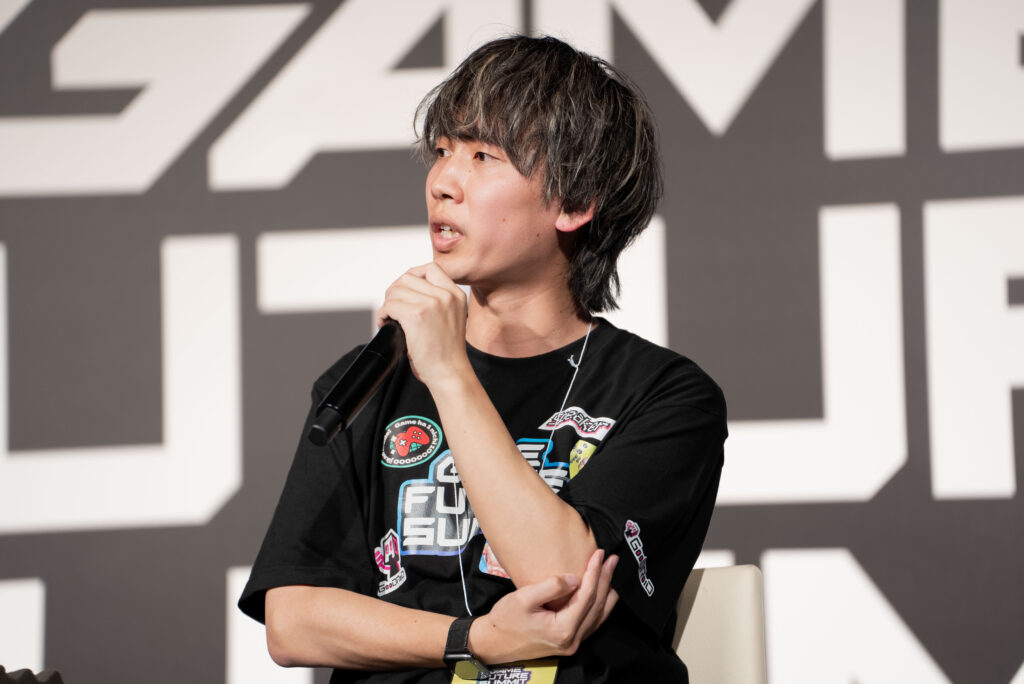
(Speaker: Mr. Onodera, GOODROID, Inc.)
Furthermore, Mr. Shimada from AppLovin, which supports the ad monetization of “Pazuribe!”, explained, “While a certain level of negative perception toward advertisements can be felt within Japan—not limited to just game apps—ad monetization is standard in foreign gaming markets, where companies aggressively leverage ads to monetize.”
In addition, Mr. Shimada pointed to the increasing integration of ads in VOD services like YouTube and Netflix within Japan recently, analyzing: “The perception toward ads is turning more positive than before. Since rewarded ads are frequently implemented in manga apps as well, ad monetization is likely becoming gradually accepted in Japan compared to the past.”
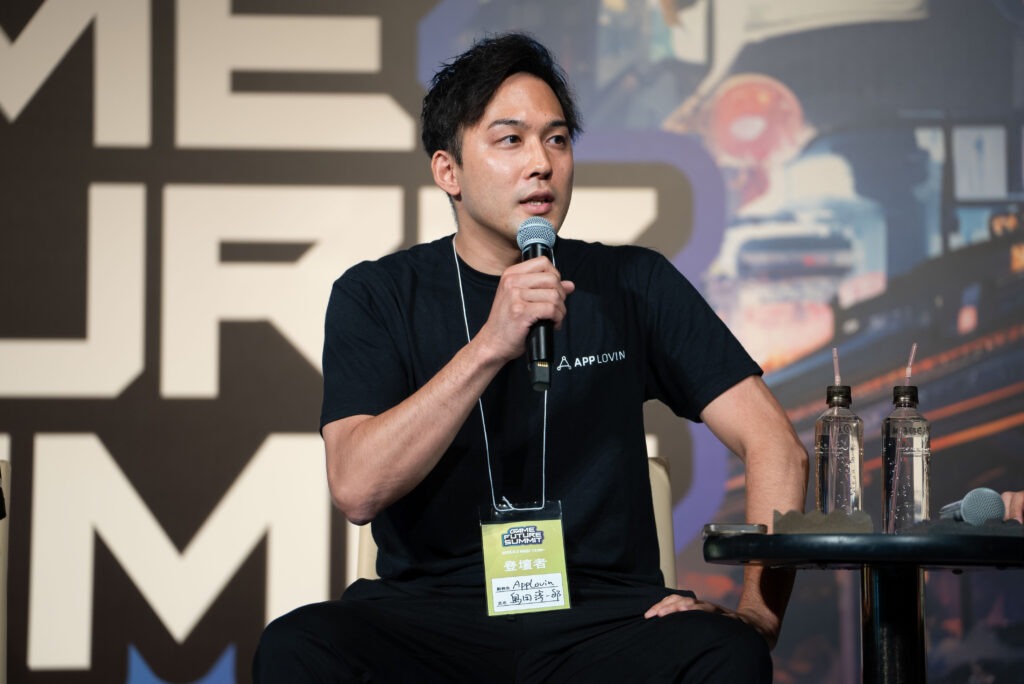
(Speaker: Mr. Shimada, AppLovin)
[The Balance Between Ad Monetization and In-App Purchases]
Regarding the balance between ad monetization and in-app purchases, it is generally believed that aggressive ad implementation decreases purchase revenue. However, Mr. Onodera from GOODROID revealed their monetization approach for non-paying and light users: “We recognize that convincing non-paying or light users to make in-app purchases is highly difficult. Therefore, we monetize this segment by having them actively engage with advertisements to generate ad revenue.”
Furthermore, Mr. Onodera noted, “Apps contain items that cannot be obtained without paying. If users could acquire the exact same items as paying users simply by watching a video ad, there is a risk that existing paying users would stop paying and shift to using ads, ultimately lowering purchase revenue.” He shared that they differentiate items obtainable via purchases from those obtainable via ads.
[Design Points of Ad Monetization]
Addressing how to insert ads without disrupting the app’s UX to achieve optimal results, Mr. Onodera shared the current situation: “While ‘Pazuribe!’ monetizes through various ad formats, rewarded video ads serve as the primary revenue source. Unlike general internet ads, rewarded video ads allow users to actively watch videos with the purpose of gaining a reward. Based on this characteristic, we calculate the timing of ad displays to match user needs and consciously design leading paths so users can watch ads with a positive mindset.”
Agenda 3: Success Stories of Hybrid Monetization Utilizing “SKYFLAG”
[Concerns Regarding the Implementation of “SKYFLAG”]
Compared to rewarded video ads, many feel a higher hurdle when it comes to implementing offerwall-style platforms like “SKYFLAG.” However, Mr. Shiraishi from Fundoshi Parade, which has successfully maximized ad revenue through its introduction, stated, “While there are fears that utilizing reward-based monetization like ‘SKYFLAG’ might trigger a departure of paying users or lower LTV (lifetime value), we looked at the past track records of various reward monetization providers. We determined that utilizing reward monetization, including ‘SKYFLAG,’ brings no negative impact on purchase revenue and allows us to capture additional ad revenue, which led to our decision to implement it.”
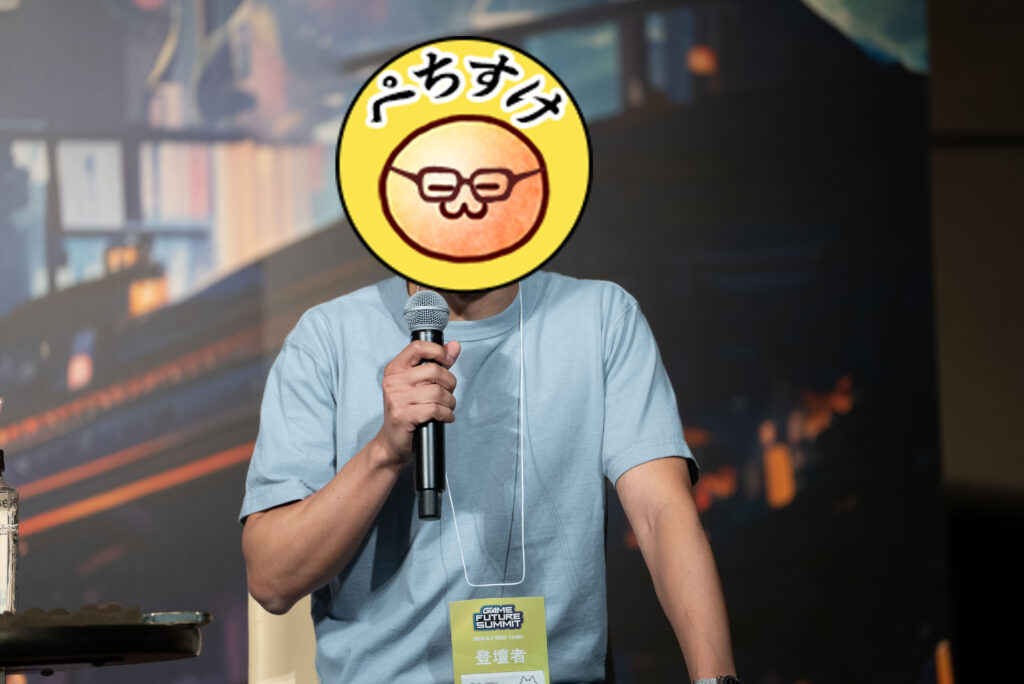
(Speaker: Mr. Shiraishi, Fundoshi Parade Co., Ltd.)
[The Profitability of “SKYFLAG”]
Regarding the impact on paying users when introducing “SKYFLAG,” Mr. Hosoda from Skyfall—which supports the ad monetization of Fundoshi Parade’s “Just Kill Me 3” via the platform—introduced the benefits obtained through “SKYFLAG” based on data from Skyfall’s own game app, “Poker Chase.” He revealed a case study where 12.44% of users who previously played the game completely for free converted into paying users after interacting with “SKYFLAG.” He analyzed, “Users who previously enjoyed the game strictly within the free-to-play boundaries earned rewards through ‘SKYFLAG.’ By experiencing the same premium gameplay as paying users, they gradually transitioned into becoming paying users themselves.”
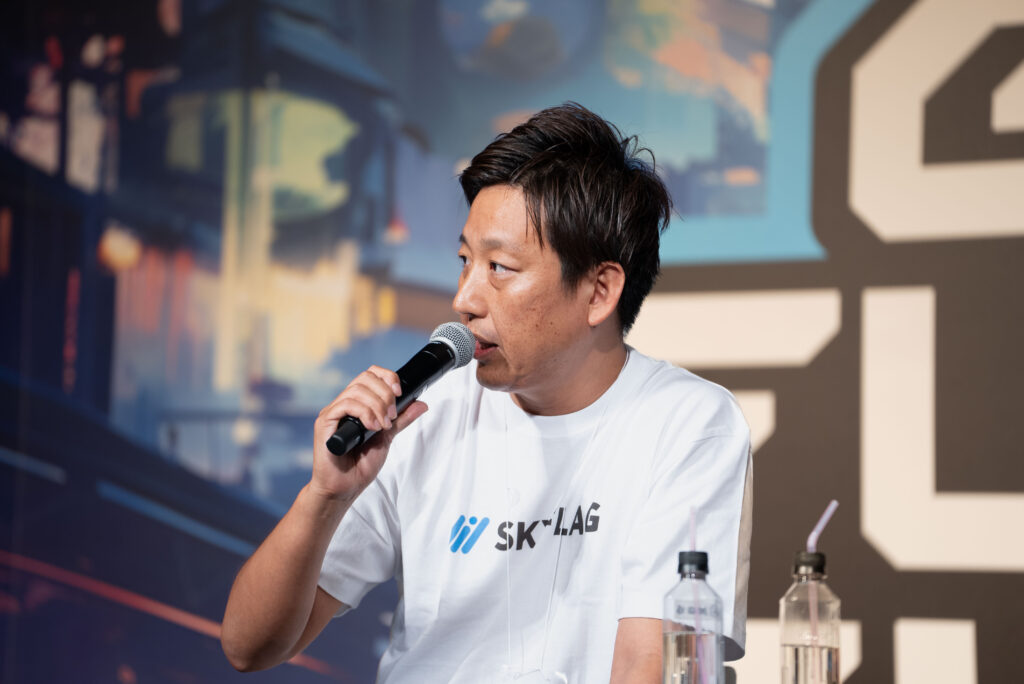
(Speaker: Mr. Hosoda, Skyfall Inc.)
Additionally, when comparing ARPU (Average Revenue Per User) between users who started paying after utilizing “SKYFLAG” and paying users who had never used “SKYFLAG,” he shared that the average purchase amount of users who paid after using “SKYFLAG” expanded by approximately threefold, explaining the reality that the platform effectively boosts users’ willingness to make purchases.
[Operational Tips for “SKYFLAG”]
While explaining how “Just Kill Me 3” managed to expand its ad revenue utilizing the platform, Mr. Shiraishi from Fundoshi Parade noted that implementing “SKYFLAG” initially boosted their ad revenue by approximately sixfold. “Through various initiatives regularly executed within ‘SKYFLAG,’ we succeeded in driving an additional 1.2 times increase in ad revenue,” he said, introducing the actual measures taken. He added, “By executing diverse initiatives targeted specifically to core users and light users according to their profiles, we are constantly breaking our ad revenue records while operating ‘SKYFLAG’.”
Furthermore, Mr. Hosoda from Skyfall mentioned that because dedicated account managers at “SKYFLAG” propose and run various initiatives, the operational burden on the media side after implementation is minimal. He shared, “By setting diverse conditions and creating opportunities for users to earn rewards when taking on offers (advertisements), users are able to enjoy utilizing ‘SKYFLAG’ while having fun.”
Agenda 4: Future Outlook of “Ad Monetization” in the Game App Market
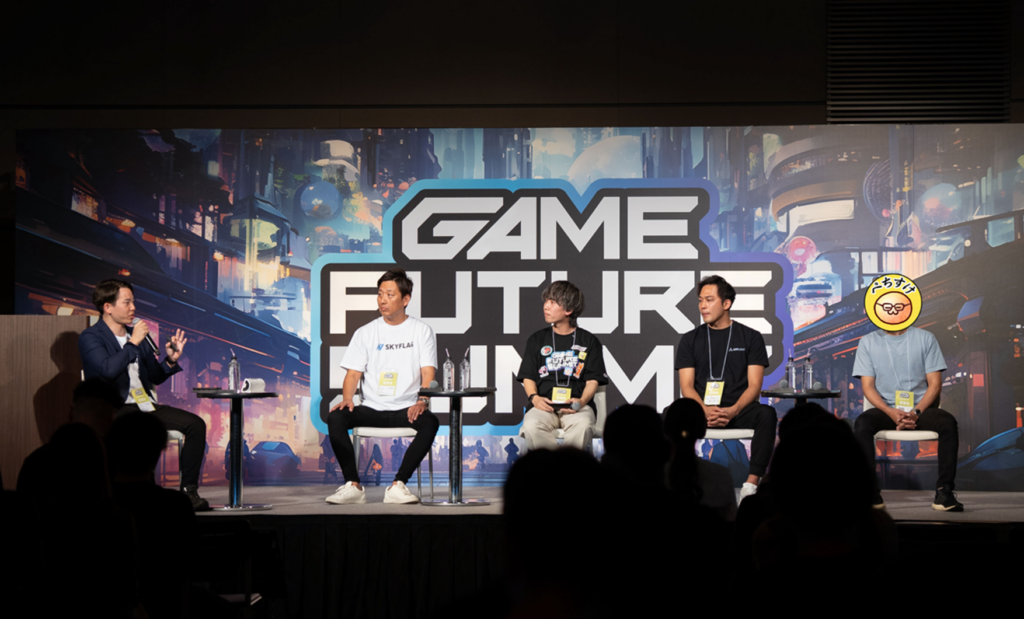
Regarding the use of rewarded video ads in the game app market, Mr. Onodera from GOODROID explained, “While it is not yet mainstream in social games, the opportunities for users to encounter ads are rising through VOD services like YouTube recently. As gaming users interact with ads more frequently, the hurdle for users to engage with formats like rewarded video ads will likely lower. By actively creating opportunities for users to encounter ads even within social games, game operators can secure revenue streams outside of in-app purchases, which will likely accelerate the hybridization of revenue over time.”
Mr. Shiraishi from Fundoshi Parade explained that ad monetization is heavily influenced by external factors. Sharing his personal experience, he noted, “Fluctuations in the economy change the costs and volumes of ad placements, which can cause CPM (cost per mille) and LTV to swing up or down. Because of this, it is necessary to aggressively take on new initiatives. We structure our monetization carefully so that even if external factors bring a negative impact, the overall game revenue does not drop. As part of that strategy, we actively implement ‘SKYFLAG’ into our new game apps.” He expressed his desire to continue embracing new initiatives in ad monetization moving forward.
About “GAME FUTURE SUMMIT”
Launched under the theme “Boosting the Future of the Gaming Industry Together,” GAME FUTURE SUMMIT is one of the industry’s largest business conference events specializing in game production and marketing. The inaugural “GAME FUTURE SUMMIT 2024” welcomed a diverse lineup of speakers active in the gaming industry, delivering a variety of talk sessions and presentations focused on game production, marketing, and the future of the gaming market. Despite being the first-ever iteration, over 1,000 individuals attended offline, creating a highly passionate venue throughout the entire day up until the after-party.
“GAME FUTURE SUMMIT 2025” is scheduled to take place on Wednesday, June 4, 2025.
・Special Event Site: https://game-future-summit.jp/
・X(Twitter): https://twitter.com/Game_F_S
・YouTube: https://www.youtube.com/@Game_F_S
About “SKYFLAG”

“SKYFLAG” is a reward marketing platform that prioritizes user experience.
It has established a unique model leveraging rewards and provides comprehensive marketing support across monetization, promotion, and research.
・Service Site: https://skyflag.info/
About “Skyfall”

Skyfall operates under the banner of “Creating a world where good things spread,” running “SKYFLAG,” an advertising monetization platform that aligns with the user experience, and “SKYFLAG Research,” a marketing research service that pursues representativeness.
Furthermore, the company operates “Poker Chase,” an authentic Texas Hold’em poker game, and “Pocket Play,” an app where users can earn rewards simply by playing their favorite games.
| Company Name | :Skyfall Inc. |
| CEO | :Tomokazu Hasegawa |
| Address | :(Tokyo Head Office) 19F Midtown Tower, 9-7-1 Akasaka, Minato-ku, Tokyo :(Niigata Office) Nippon Life Insurance Niigata Building 7F, 2-4-10 Higashiodori, Chuo-ku, Niigata-shi, Niigata |
| Business Description | :Marketing Platform Business and App Media Business |
| Number of employees | :190 (As of the end of December 2024) |
| Established | :October 2017 |
| Capital | :79,393,750 yen |
| Website | :https://skyfall.co.jp/ |