[Skyfall × Yamagata University] Successful Validation of Effective Countermeasures Against Fraudulent Responses in Smartphone Surveys!
Demonstrating the Quality Improvement of “SKYFLAG Research” Through Joint Research with Yamagata University!
Skyfall Inc. (Headquarters: Minato-ku, Tokyo; CEO: Tomokazu Hasegawa; hereinafter “Skyfall”), in collaboration with the National University Corporation Yamagata University (Yamagata-shi, Yamagata; President: Hidetoshi Tamate; hereinafter “Yamagata University”), is pleased to announce that they have conducted multiple verification experiments aimed at improving quality in marketing research.
This research focused on countermeasures against “fraudulent responses (careless responses),” which have recently emerged as a significant challenge in the marketing research industry. Empirical verifications were conducted to identify effective methods for capturing respondents’ attention and encouraging more prudent response behavior.
Background of the Project
With the business environment rapidly changing in recent years, the reliability and accuracy of research data have become more indispensable than ever for companies to make precise decisions.
In the marketing research industry, there is a growing concern that the reliability of survey data is declining due to the increase in inappropriate responses and respondents with insufficient identity verification.
To address these challenges, ensure data accuracy, and support decision-making, we conducted verification experiments utilizing “SKYFLAG Research.”
Main Effects Confirmed Through the Experiments
In this experiment, we verified methods to improve data quality against fraudulent responses in smartphone surveys. As a result, the following critical insights were obtained:
<Regarding Written Warnings>
Displaying written warnings such as “Please answer honestly” at the beginning of a survey has traditionally been considered effective as a countermeasure against fraudulent responses in the marketing research industry. However, this smartphone survey revealed that the quality of responses barely improved with this method alone. This is believed to be because smartphone screens are small, making it easy for users to skim through or skip text descriptions.
<Regarding Methods to Improve Response Quality>
Conversely, we verified methods that required respondents to read displayed instructions and answer exactly according to specified conditions, or to read a message and input designated content (such as specific numbers). The results confirmed a trend where the time spent on answering increased, the percentage of fraudulent responses decreased, and the response content became noticeably more meticulous.
It became clear that incorporating an element that requires a simple action from the respondent at the beginning of the survey, rather than just presenting text, leads to significantly more attentive answers.
Furthermore, a follow-up experiment revealed that attention levels improved even for introductory texts when a mechanism was implemented to verify whether the respondent understood what they read (e.g., a question testing the content of the introductory text).
These results demonstrate that in smartphone surveys, data quality can be enhanced not only through text-based warnings but also by requiring simple actions or incorporating systems that ensure written warnings are thoroughly read.
*While response time is used as a primary metric in this analysis, it has been verified in combination with multiple careless response indicators.
*The above findings are based on statistical trends obtained from the experiments; the optimal method varies depending on the survey design and target audience.
Initiatives in “SKYFLAG Research”
SKYFLAG Research has already utilized the findings of this verification as part of its efforts to enhance respondent deliberateness and answer accuracy, applying them to the regular updating of panel information and the quality improvement of response data.
By enhancing the reliability of survey data, we achieve the delivery of marketing research that pursues higher representativeness, supporting business decision-making with essential survey results.
Comments
Professor Yoshihisa Kaneko, Faculty of Humanities and Social Sciences, Yamagata University
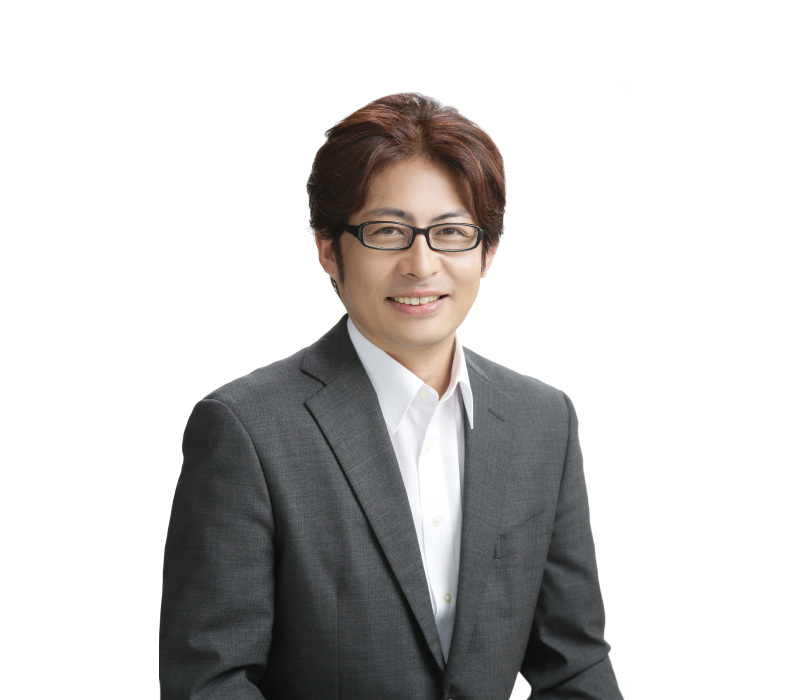
The verification of ‘SKYFLAG Research’ was a highly meaningful endeavor in terms of increasing the reliability of marketing research. I was deeply impressed by their commitment to the continuous scientific evaluation and improvement of data quality. I look forward to further enhancing the utility of research panels through future industry-academia collaborations.
Munenori Noguchi, Head of Research Division, Research Business Department, Skyfall Inc.

By conducting objective verifications from an academic perspective, we were able to reaffirm the effectiveness of the research operations we have cultivated internally. Furthermore, it served as an opportunity to deeply understand the behavioral characteristics of respondents, providing a highly valuable opportunity that we can apply to future panel operations and survey design improvements. Moving forward, we intend to continue taking on the challenge of improving research quality from both academic insights and practical know-how.
Future Outlook
In Skyfall’s marketing research business, we aim to strengthen the data foundation that clients utilize for decision-making by scientifically verifying and improving survey accuracy and reliability. Moving forward, we will combine academic knowledge with practical expertise to engage in research improvements through industry-academia collaborations, further elevating response accuracy and data reliability.
Through these continuous verifications, we aim to provide high-quality marketing research that clients can confidently use for their decision-making, thereby strengthening the data foundation that supports strategic corporate judgments.
About Yamagata University

Yamagata University is one of the largest national universities in Eastern Japan, featuring six faculties and one academic unit—the Faculty of Humanities and Social Sciences, Faculty of Regional Education and Culture, Faculty of Science, Faculty of Medicine, Faculty of Engineering, Faculty of Agriculture, and the Academic Unit of Social Co-creation and Digital—along with six graduate schools.
- Website: https://www.yamagata-u.ac.jp/
About “SKYFLAG Research”

“SKYFLAG Research” is a marketing research service that pursues representativeness. By expanding opportunities for internet research survey responses through various media via “SKYFLAG,” rather than being limited to conventional point sites, we support business decision-making with essential research results.
- Service Site: https://skyfall.co.jp/research/skyflag-research/
About “Skyfall”

Skyfall operates a reward marketing platform “SKYFLAG” with the mission of “creating a world where good things spread,” while also putting focus on the user experience.
The company also manages an authentic Texas Hold’em poker game “Poker Chase” and “Pocket Play,” an app where users can earn rewards by playing games.
| Company Name | : Skyfall Inc. |
| CEO | : Tomokazu Hasegawa |
| Address | : (Tokyo Head Office) 19F Midtown Tower, 9-7-1 Akasaka, Minato-ku, Tokyo : (Niigata Office) Nippon Life Insurance Niigata Building 7F, 2-4-10 Higashiodori, Chuo-ku, Niigata-shi, Niigata |
| Business Description | : Reward Marketing Platform Business and App Media Business |
| Number of employees | : 200 (As of the end of December 2025) |
| Established | : October 2017 |
| Capital | : 79,393,750 yen |
| Website | : https://skyfall.co.jp/ |